High-traffic public spaces play a vital role in how people move, rest, gather, eat, work and connect. From retail precincts and university campuses to parks, civic spaces and mixed-use developments, these environments rely on public space furniture that can perform under constant daily use.
More than static elements in a landscape, public seating, commercial benches and outdoor commercial tables influence comfort, accessibility, circulation, dwell time and the overall quality of the public realm. For specifiers, the real question is not simply whether the furniture looks good, but whether it will keep performing after years of weather, wear and public use.
As an Australian manufacturer, botton+gardiner creates public space furniture that brings together design quality, structural performance, sustainable materials and human comfort.
Start with How the Space Will Be Used
Before selecting commercial seating or outdoor furniture, understand the role of the space. A park pathway may need a simple rest point, while a retail courtyard may need outdoor seating that encourages people to pause, dine and stay longer. A school or university campus may need robust seating areas for studying, waiting, supervision and high-volume movement.
Consider:
Who will use the space?
How long are people likely to stay?
Will the furniture support resting, waiting, dining, working or socialising?
Where does foot traffic naturally build up?
Will wheelchair users, prams, trolleys or mobility aids need clear access?
Good street furniture should support the way people already use a space, not interrupt it. The strongest furniture plans begin with behaviour, not product selection.

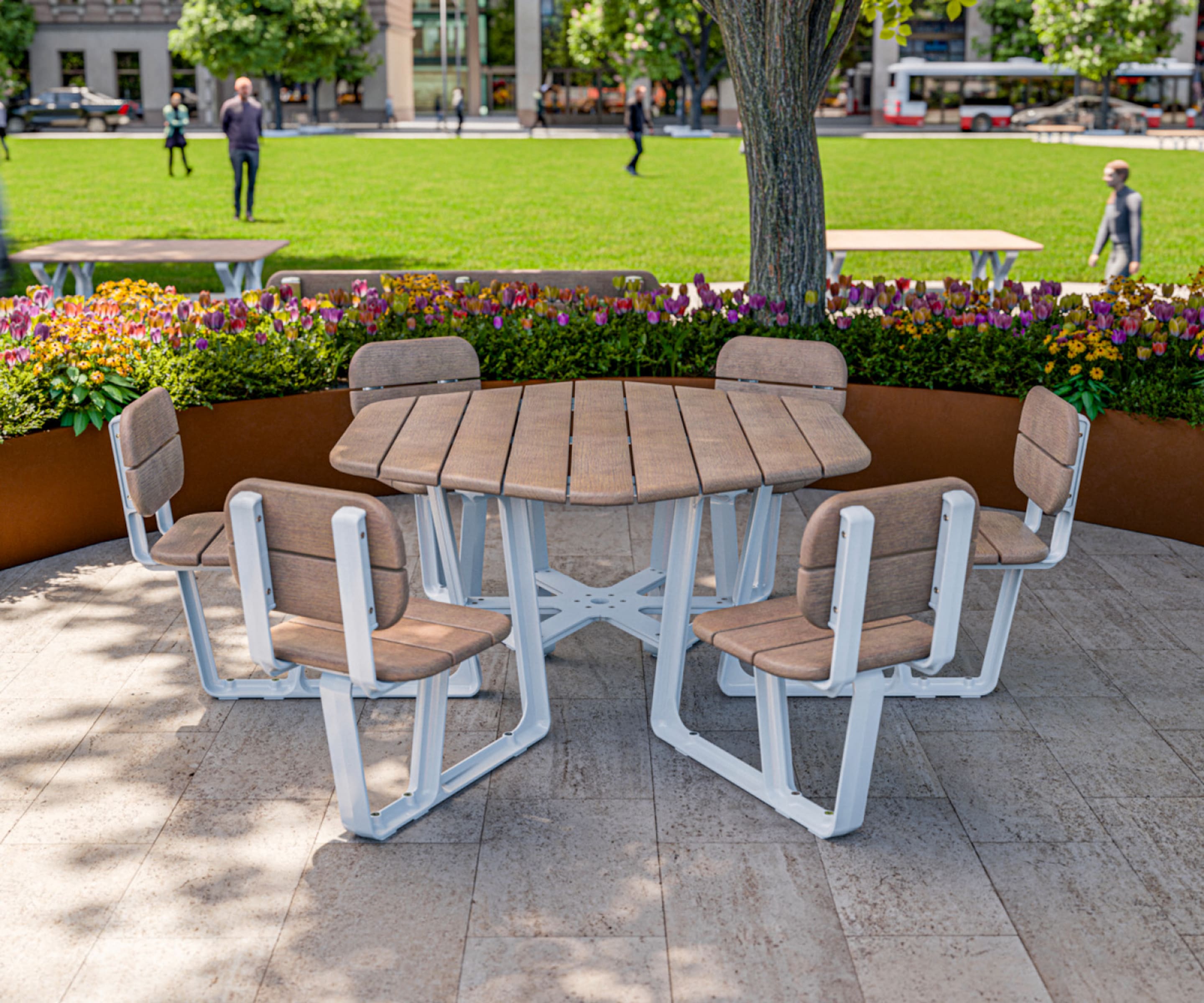
Specify Commercial-Grade Strength from the Start
Public spaces place unique demands on furniture. Constant use, exposure to the elements, regular maintenance and occasional misuse all influence long-term performance. In high-traffic environments, durability depends on more than choosing a material that simply looks robust.
Key engineering details include:
Frame strength and load-bearing performance
Secure fixings, weld quality and appropriate anchoring
Stable bases and robust joints
Tamper-resistant details
Smooth edges and reduced snag points
Drainage-friendly design
These details may not stand out in a product image, but they strongly affect safety, stability and long term performance. They are also the result of considered engineering. With in-house design and engineering capability, botton+gardiner develops products where structural performance, practical detailing and material longevity are integral to the design - not separate considerations.
Choose Materials That Suit Australian Conditions
Material choice should respond to the site, not just the desired look. Australian public spaces can be exposed to strong UV, heat, rain, humidity, coastal air, dust, spills, daily surface wear and frequent cleaning routines.
Certified Australian hardwoods: Bring warmth, natural character and tactility to public seating, commercial benches and outdoor furniture settings.
Duraslat smart alternative: Offers a practical, sustainable option for projects that need durability, consistency and reduced maintenance demands.
Locally sourced steel and aluminium: Steel supports strength and structural reliability, while aluminium offers lightweight durability and corrosion resistance. Both can help maximise recycled content and recyclability.
Powder-coated finishes: Support colour consistency, surface protection and a refined finish across commercial outdoor furniture projects.
For public realm projects, material selection is most successful when durability, maintenance, sustainability and design intent are considered together from the start.
